

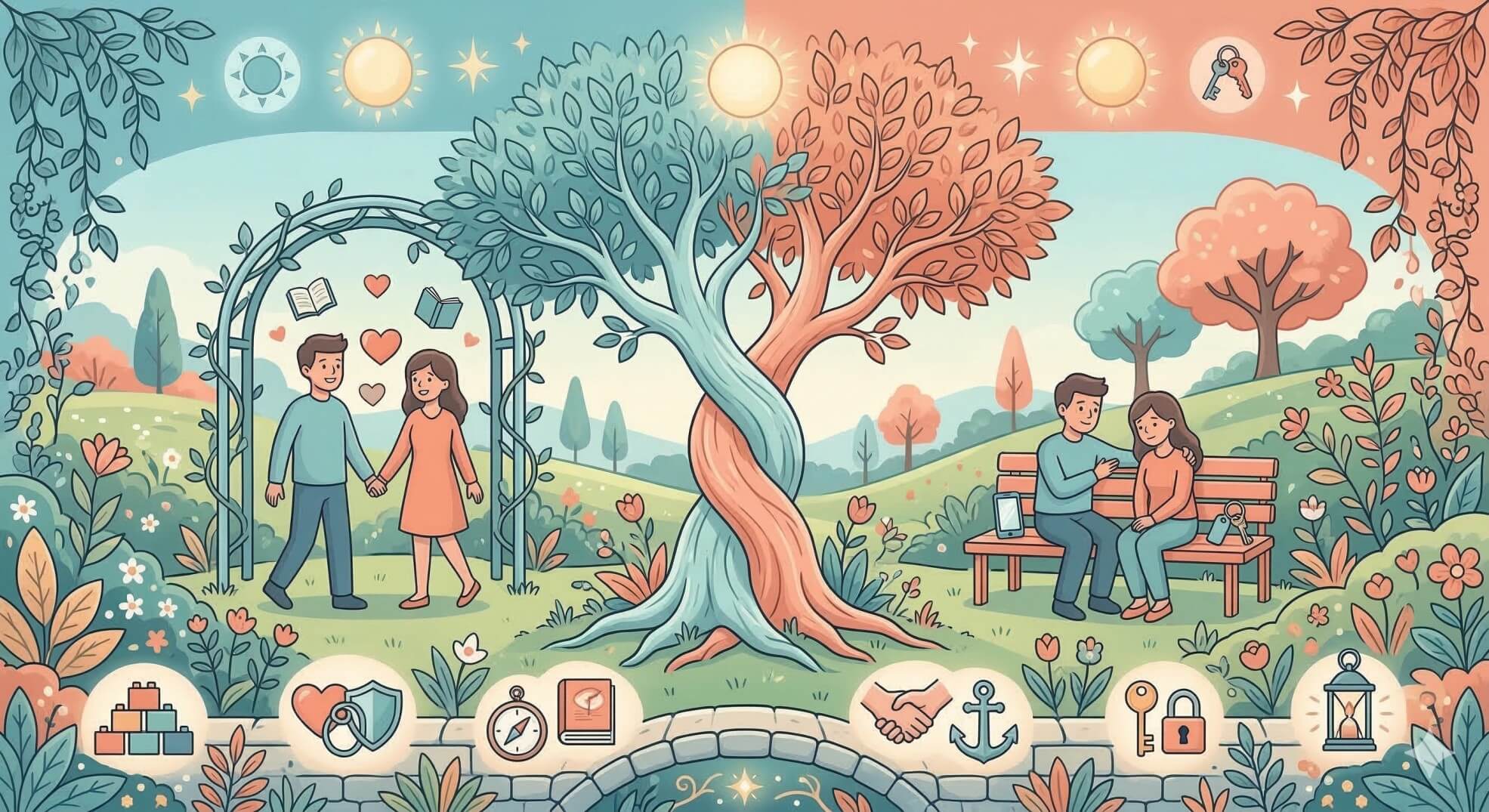
When do you feel loved? For some people its when someone chooses them, for some others its being taken care of and an other few it being someone’s first priority. But what is love? Love is a complex emotion and often people have different perspectives on it and experience the feeling of being loved differently.
But sometimes, the things that make you feel loved most deeply like being chosen, being cared for, being someone’s priority can quietly become the things you cannot live without. When this stops being a desire and starts being a necessity, love begins to shade into something more complex called emotional dependency.
Understanding Emotional Dependency
Emotional dependency feels nothing like weakness but more like true love, like caring deeply, like loyalty, like devotion. But underneath those feelings sits a quiet but constant fear, a fear of abandonment, fear of not being enough, fear that the relationship could disappear if they are not cautious.
Unlike love, emotional dependency, is driven by need rather than choice. The dependent person often feels most alive and most themselves within the relationship, and hollow or lost outside of it. Their emotional thermostat, in a sense, is controlled by someone else.
That is, you might the need for your partner to take care of your emotions and problems. Time apart might feel threatening rather than natural. You might feel lost or aimless when your partner is not around, unsure of what to do with yourself.
Your self-worth often becomes tied to how your partner sees and treats you. When partner is attentive and loving, you feel valuable. When partner is preoccupied or critical, you feel worthless.
What Does Healthy Love Look Like?
So what does actual love look like?
Real love is, perhaps surprisingly, quieter than people expect. It looks like someone showing up consistently, not just in the grand gestures but in the ordinary moments. It looks like respect for each other’s separateness.
Two people who have their own friendships, interests, and interior lives, yet choose to share their world with each other. It looks like conflict that doesn’t threaten the foundation, disagreement without cruelty, and repair after rupture.
It looks like someone who supports your growth even when that growth brings changes in you. It brings a feeling of being chosen, not out of fear or need, but out of genuine desire.
While love is a choice, emotional dependency comes from trying to fulfil a need or overcome a fear or fill a void in you with that person.
Psychologist and social philosopher Erich Fromm (1956) challenged the popular notion that love is something that simply happens to a person, arguing instead that love is an active power. It is more of a practiced art that requires discipline, commitment, and conscious effort rather than something people fall into.
For deeper reading about his ideas on love, you can explore his famous book The Art of Loving.
Why Emotional Dependency Is Often Mistaken for Love
From our experience in working with clients, it is often observed that people mistake emotional dependency for actual love. When we look at why this happens, it was observed that emotional dependency felt like love to them and sometimes, it begins as love before slowly turning into dependency.
Over time, unresolved fears, past wounds, and unmet needs quietly shift the dynamic.
Sometimes it’s the intensity of that experience of being emotionally dependent. The constant thinking about someone, the inability to imagine life without them; what we have been taught through every love song and romantic film that ‘this overwhelming feeling is exactly what love is supposed to feel like’.
But what nobody tells you is that anxiety and love can feel almost identical in the body; heart races, the mind fixates, the tingling sensations in the body, the thought of losing someone becoming unbearable.
Cultural Messages That Romanticize Dependency
Dependency also speaks in love’s language like “you are my world,” “I will give you my everything”, “you are my everything”.
These phrases are so romanticized in our culture that they stopped sounding like warning signs and started sounding like devotion. Psychologically, they are closer to descriptions of dependency than of healthy love.
Then there is possessiveness and jealousy, which dresses up as proof of how much someone cares, when really it is rooted far more in insecurities and fear than in love.
The truth is, people do not mistake dependency for love out of foolishness. They mistake it because dependency hurts when it is threatened and we have been taught that if something hurts that much, it must really matter.
Where Does Emotional Dependency Come From?
Now where does dependency come from?
When working with clients addressing dependency issues, we often uncover deep-seated self-worth issues or a core belief that ‘I am not enough on my own.’ These unhealthy belief systems most commonly develop from childhood experiences of inconsistent or conditional love where it needed to be earned.
Other times it grows from past relationships that broke something you, leaving behind the lesson that people leave and the only way to prevent that is to hold on tighter.
Psychologist Robert F. Bornstein (1993) noted that pathological dependency is not about love itself, but about an underlying deficit in self-sufficiency.
In therapy, we help clients identify their thinking patterns and false assumptions, build healthy relationships, and most importantly, develop a sense of self-worth that belongs to them alone.
Consult a Psychologist for Better Relationship Understanding
If you find yourself relating to patterns of emotional dependency, seeking guidance from a trained mental health professional can be a valuable step. A qualified psychologist can help you explore the deeper roots of dependency, understand your emotional patterns, and develop healthier ways of relating to yourself and others.
Through professional support, individuals can learn to build stronger self-worth, establish emotional boundaries, and develop relationships based on mutual respect and independence rather than fear or insecurity.
Working with a psychologist can also help you:
- Understand attachment patterns in relationships
- Build emotional resilience and self-confidence
- Improve communication and conflict resolution skills
- Develop healthier relationship expectations
If emotional dependency is affecting your well-being or relationships, consider consulting a licensed psychologist or mental health professional in your area. Professional guidance can provide clarity, support, and practical tools to help you move toward healthier, more balanced relationships.
Frequently Asked Questions (FAQ)
Healthy love is based on choice, respect, and individuality. Emotional dependency is driven by fear, insecurity, and the need for constant reassurance from a partner.
Yes. Emotional dependency can feel intense and passionate, which is why many people mistake it for love. However, it is usually driven by fear of loss rather than genuine connection.
Common signs include:
Fear of being alone
Needing constant reassurance
Feeling worthless without a partner
Anxiety when separated from the partner
Emotional dependency can become unhealthy if a person’s self-worth and emotional stability depend entirely on their partner.
Yes. With self-awareness, therapy, and building personal identity and self-worth, individuals can shift from dependency toward healthier love.
Healthy relationships grow when both partners maintain individuality, communicate openly, respect boundaries, and support each other’s personal growth.
Conclusion
If you recognize yourself in the patterns of dependency, do know that this does not mean you are broken or incapable of healthy love.
It simply means there is work to be done and that work, as difficult as it is, is some of the most important work a person can do.
Many people have made this journey from dependency to healthier, more balanced relationships.
The goal is not to need people less. It is to build enough of a relationship with yourself that when love comes, you can receive it freely and not grip it out of fear.